How Do You Take a Custom Hair Claw or Headband From Concept to Bulk Production?
October 19, 2026
You move a custom hair claw or headband from concept to bulk production by following a structured path: define the design, choose an OEM or ODM model, approve samples, then scale to serial manufacturing with clear quality checks. A reliable custom hair accessories supplier manages each stage with documented decisions. Take a retailer who wants a tortoiseshell acetate claw clip with a printed logo. The supplier reviews the drawing, selects cellulose acetate, produces a prototype, then runs a pilot batch. Only after approval does the plant move to full production. This workflow prevents costly rework and protects your delivery schedule. This guide walks buyers through the full development cycle with practical examples from the hair accessory industry. A capable OEM hair accessories partner turns your idea into a finished, sellable product.
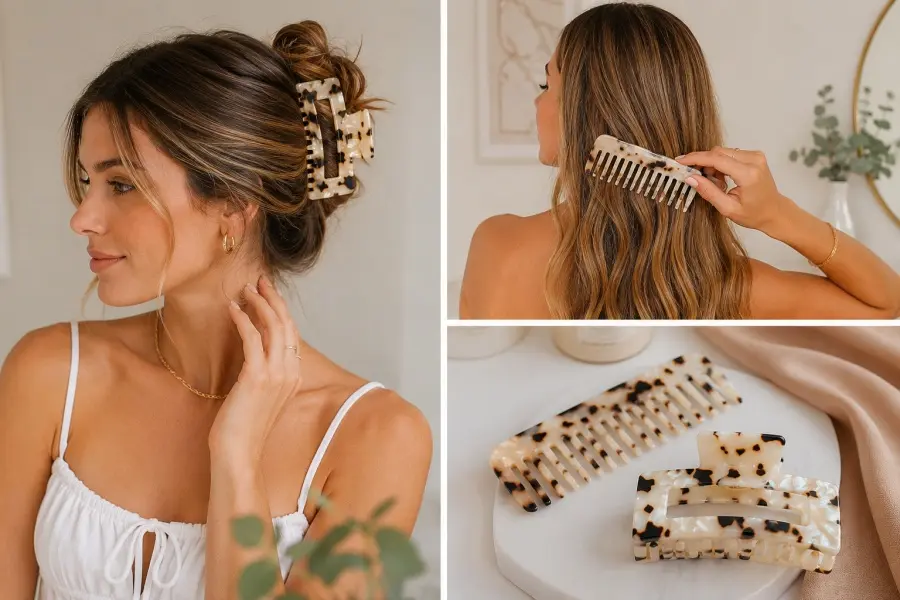
Define Your Product Vision and Target Market
Clarity at the start saves time and money later. Describe the product’s function, style and price point before you contact any factory. Decide who will buy it and where it will sell. These choices drive material, finish and packaging decisions.
Identify the Product Type and Use
Hair claws, headbands, clips and barrettes each need different tooling and materials. A heavy acetate claw clip suits statement styles. A slim metal clip fits minimal designs. Headbands vary in width, flexibility and padding. Specify the exact category you need.
Your target customer’s habits matter too. A fashion-forward buyer may prefer bold colors and trend-driven shapes. A functional buyer wants a clip that holds thick hair securely. Define these preferences so the factory can propose the right construction and spring strength.
Set Price and Margin Targets
Retail price and your target margin define the acceptable factory cost. Share a target range so the supplier can recommend materials and finishes within budget. An acetate clip with metal accents costs more than a plain molded design. Trade-offs between durability, appearance and cost appear early when you set a clear target.
Choose Your Development Model: OEM, ODM or Private Label
Hair accessory brands work with suppliers through three main models. Each model shifts responsibility for design, tooling and inventory. Choose the one that fits your team’s capabilities.
OEM for Your Exact Design
Under an OEM arrangement, you provide the design and specifications. The factory manufactures to your drawings and tooling. This model suits brands with in-house design teams and specific product requirements. You control the design and own the related tooling. The supplier handles manufacturing, quality control and logistics.
ODM for Design Assistance
With ODM, the factory designs and manufactures the product based on your brief. You describe the style, material and function, and the supplier develops the details. This model suits brands without a dedicated design team. You access the factory’s engineering experience and existing molds, which often shortens lead times and lowers tooling cost.
Private Label for Ready Products
Private label works when the supplier offers finished designs you can brand as your own. You select from existing styles, add your logo and packaging, then order in bulk. This model suits fast market entry and low initial investment. You trade some exclusivity for speed and simplicity.
Compare these models against your resources. Each one changes tooling ownership, minimum order quantity and development cost.
Understand Materials and Their Quality Impact
Material selection determines the product’s look, durability and cost. Hair accessories use several common materials, each with distinct properties.
Cellulose Acetate
Cellulose acetate ranks as a leading material for hair clips and headbands. It comes from wood pulp, so it is biodegradable and eco-friendly. Acetate offers rich color depth, smooth edges and a warm, natural feel. A cellulose acetate hair claw clip resists brittleness and holds its shape with proper care.
Acetate takes polishing well, giving a glossy, jewelry-like finish. It also accepts patterns such as tortoiseshell, marble and gradient effects. These aesthetics make acetate popular for mid-range and premium fashion accessories. The material works well for custom shapes because factories can cut and polish it precisely.
Other Common Materials
Plastic resins such as ABS and PC offer low cost and easy molding. They suit mass-market clips and headbands with simple shapes. Metal accessories provide strength and a sleek look but weigh more. Wood and bamboo deliver a natural aesthetic for eco-conscious brands. Each material carries different tooling, processing and finish requirements.
The table below compares common materials used for custom hair accessories.<caption>Table 1: Common materials for custom hair clips and headbands</caption>
| Material | Key Benefits | Typical Use | Relative Cost |
|---|---|---|---|
| Cellulose acetate | Biodegradable, rich color, smooth finish | Fashion claw clips, headbands | Medium |
| ABS plastic | Low cost, easy molding | Mass-market clips | Low |
| PC plastic | Strong, impact resistant | Durable clips | Low–medium |
| Metal (alloy/steel) | Strong, sleek look | Minimalist clips, accents | Medium |
| Wood / bamboo | Natural, eco-friendly | Craft and eco lines | Medium |
Choosing the right material affects your product’s perceived value and unit cost. Ask your supplier for samples of each option before you commit.
Sample, Tool and Approve Before Scaling
Prototyping protects you from expensive mistakes. The development phase confirms that the design works, the material behaves as expected and the finish meets your standard.
Review the Design and Create a Prototype
The supplier reviews your design for manufacturability. Features that are too thin, too sharp or poorly positioned cause breakage or tooling problems. A skilled engineer flags these issues and proposes adjustments before any tool is made.
The factory then produces a prototype, often by hand or through a low-volume method. You inspect the prototype for shape, size, finish and function. A claw clip should open and close smoothly without cracking. A headband should flex without losing shape.
Confirm Tooling and Production Process
Once you approve the prototype, the factory machines the production tool. Tooling cost depends on part complexity and the number of cavities. Confirm who owns the tool and whether the price includes its design and trial.
After tooling, the plant runs a pilot batch. The pilot verifies that the tool produces consistent parts at production speed. Inspect the pilot pieces closely for dimensional accuracy and surface quality. Your approval of the pilot batch unlocks bulk production.
Run Bulk Production With Clear Quality Checks
Bulk production requires consistent quality across every batch. A disciplined supplier applies incoming inspection, in-process checks and final QC before packing. Define your acceptance criteria in writing so both sides share the same standard.
Set Quality Standards and Inspection Points
Agree on acceptable tolerances for size, color and finish. Specify which defects matter, such as cracks, surface scratches, color mismatch or weak springs. Determine sampling plans, often following ISO 2859-1, so both sides know how many pieces to inspect per batch.
A reliable supplier holds inspection at key stages. Raw material checks confirm the correct acetate or plastic grade. In-process checks catch tooling wear before it creates many defective parts. Final inspection covers appearance, function and packaging before shipment.
Plan Lead Times and Order Quantities
Lead time covers tooling, sample approval, bulk production and shipping. Confirm each stage’s duration and build buffer time into your project. Minimum order quantities vary by model. OEM parts with new tooling usually need higher MOQs to spread tool cost. Private label orders can start smaller because the tool already exists.
Production capacity matters for seasonal demand. Hair accessories peak before holidays and fashion seasons. Reserve production slots early to protect your launch date.
Add Branding and Custom Packaging
Branding turns a generic accessory into a distinct product. Custom logo hair accessories strengthen recognition and support a higher price. Custom packaging hair accessories protect the product and communicate your brand story.
Logo and Labeling Options
Factories offer several ways to add your logo. Printing suits flat surfaces and low cost. Debossing creates an indented mark for a subtle, tactile finish. Metal or resin logos add a jewelry-like detail. Choose the method that matches your brand and budget.
Confirm the logo placement, size and color against the final product. A printed logo on a dark acetate clip needs high contrast to stay visible. Check how the logo survives handling and wear.
Packaging That Protects and Sells
Packaging prevents scratches, bends and breakage during shipping. Soft pouches, boxes and hang cards each offer different protection levels. Your packaging also carries your logo, care instructions and barcode.
Retail packaging must meet destination market labeling rules. Confirm material safety, recycling claims and language requirements for your target region. Ask for a packaging sample before ordering the full quantity.
Frequently Asked Questions
Q: What is the difference between OEM and ODM for hair accessories?
A: OEM means you supply the design and the factory manufactures it. ODM means the factory designs and produces based on your brief. Choose OEM for full design control and ODM when you need engineering support.
Q: What is the minimum order quantity for custom hair claw clips?
A: MOQ depends on the model and tooling. Custom parts with new molds usually need higher quantities to spread tool cost. Private label orders can start smaller because the tool already exists.
Q: How long does it take to develop a custom headband?
A: A typical project spans four to ten weeks from design review through sampling and approval. Complexity, material availability and tooling time drive the schedule.
Q: Can you match a specific color or pattern for acetate clips?
A: Yes. Factories can match a provided color reference or Pantone value. Patterns such as tortoiseshell and marble come in standard variations that you can review on samples.
Q: Do you provide custom packaging with private label orders?
A: Yes. Suppliers offer pouches, boxes, hang cards and printed labels. Confirm design, materials and labeling rules for your destination market before production.
About Glory
Glory is a hair accessory manufacturer specializing in acetate products and OEM services. We produce acetate hair clips and headbands with in-house tooling, polishing and quality control. Our engineers support design review, material selection and prototype development from your first brief. We serve brands that need reliable supply, consistent quality and clear communication. Every order includes documented inspection and packaging to protect your product in transit. Contact us to discuss your next custom project and receive a tailored quotation.
References
- Wikipedia. Cellulose acetate. https://en.wikipedia.org/wiki/Cellulose_acetate
- Wikipedia. Plastic. https://en.wikipedia.org/wiki/Plastic
- ISO. Sampling procedures for inspection by attributes. https://www.iso.org/standard/29316.html