What Are the Top 10 Hair Accessories Suppliers for OEM, ODM and Private Label Programs?
September 11, 2026
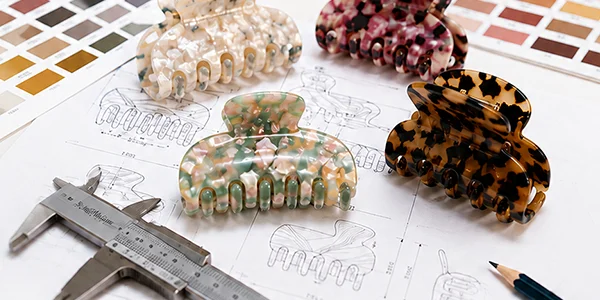
For brands, wholesalers, and retailers, the top hair accessories supplier is not simply the one with the largest catalog. The right supplier should match your product type, customization needs, target quantity, material requirements, and quality controls. A strong supplier should also support sampling, production, branding, packaging, and repeat orders. For buyers seeking OEM hair accessories, custom hair accessories, or private label programs, manufacturing capability matters as much as product variety. Based on publicly available supplier information, the following ten companies are worth considering for B2B sourcing. Glory stands out for buyers focused on cellulose acetate, fabric, and silk accessories, with OEM and ODM support from product development through bulk production.
The list below should not be treated as an official global ranking. Hair accessory manufacturing covers many product categories, from injection-molded clips to acetate claws, fabric scrunchies, headbands, combs, and occasion accessories. A supplier that fits one project may not fit another. The purpose of this guide is to help procurement teams compare supplier capabilities before requesting samples or quotations.
For example, a fashion brand developing a coordinated acetate collection may need custom molds, color matching, logo application, and branded packaging. A retailer purchasing basic scrunchies may care more about material options, production capacity, and unit cost. A beauty brand launching its own accessories may need a complete private label package. These different requirements make supplier evaluation more useful than a simple price comparison.
How Should B2B Buyers Evaluate Hair Accessories Suppliers?
Before comparing individual suppliers, buyers should define what “top” means for their project. Hair accessories cover a wide manufacturing range, so the evaluation criteria should match the product and sales channel.
1. Product specialization
Start with the supplier’s core product categories. A factory specializing in cellulose acetate may have different equipment and production expertise from a factory focused on textile accessories.
For example, acetate hair claws require material cutting, shaping, polishing, drilling, and hardware assembly. Fabric scrunchies require fabric preparation, cutting, sewing, elastic insertion, and finishing. Injection-molded clips require molds, plastic materials, injection equipment, trimming, and assembly.
A supplier’s product specialization can therefore influence development speed and production consistency.
2. OEM and ODM capability
OEM and ODM are often used together, but they describe different approaches.
OEM production usually starts with a buyer’s existing design, specification, sample, or product concept. The manufacturer produces the item according to the agreed requirements.
ODM involves greater supplier participation in product development. The manufacturer may provide existing designs, modify product structures, develop samples, or create new styles based on a buyer’s direction.
For buyers searching for custom hair accessories OEM, this distinction can affect the development process. A company with strong OEM capabilities may be ideal when the buyer already has detailed drawings or samples. An ODM-oriented supplier may provide more support when the buyer has only a concept or mood board.
3. Customization scope
Customization can involve much more than adding a logo.
A B2B hair accessory project may require changes to:
- Product shape
- Dimensions
- Materials
- Colors
- Patterns
- Surface finish
- Hardware
- Logo method
- Packaging
- Labels
- Product sets
A supplier should clearly explain which options it can handle in-house and which requirements depend on outside partners.
4. Quality control
Quality control becomes increasingly important as order volume increases.
A sample may look correct while production units show differences in color, dimensions, spring tension, polishing, stitching, or logo placement. Buyers should therefore ask how the supplier controls production from raw material inspection through final packing.
ISO explains that a quality management system helps organizations control processes, monitor performance, and improve consistency.
For hair accessories, practical quality checks can include dimensional inspection, surface inspection, hardware testing, logo inspection, packaging checks, and random finished-product inspection.
5. Communication and documentation
A reliable B2B project needs clear documentation.
Buyers should expect suppliers to confirm specifications, materials, quantities, packaging, samples, lead times, and inspection requirements.
A clear specification sheet can reduce misunderstandings during mass production. It also gives both parties a reference for repeat orders.
Top 10 Hair Accessories Suppliers for B2B Buyers
The following companies represent different manufacturing strengths. Buyers should compare them according to product requirements instead of assuming that one supplier will suit every project.
1. Glory Hair Accessories
Glory is a Yiwu-based hair accessories manufacturer specializing in cellulose acetate, fabric, and silk hair accessories. The company provides OEM and ODM manufacturing for brands, wholesalers, retailers, and importers.
Its product range includes acetate hair claws, hair clips, combs, headbands, hair ties, silk scrunchies, and fabric accessories. Its manufacturing process covers material selection, CNC cutting, polishing, assembly, logo application, inspection, packaging, and shipment.
Glory states that it has more than ten years of experience, over 5,000 custom designs, and customers in more than 30 countries. Its stated facility includes more than 3,000 square meters of production space, more than 50 artisans and technicians, and more than ten production lines.
For B2B buyers, the main advantage is the combination of product development and customization. Buyers can request custom colors, patterns, shapes, logos, dimensions, and retail packaging.
Glory also supports private label projects. Packaging options include paper cards, gift boxes, pouches, and other retail formats.
This makes Glory particularly relevant to fashion brands and accessory retailers that need coordinated collections rather than individual stock products.
For buyers looking specifically for an OEM hair accessories manufacturer, Glory provides a direct manufacturing route for acetate and fabric accessory programs.
2. TrendClip Accessories
TrendClip Accessories is based in Yiwu and focuses on wholesale and OEM hair accessories. Its stated product range includes scrunchies, headbands, hair bows, clips, pins, combs, ties, head wraps, and other accessory categories.
The supplier describes its services as covering product development, material coordination, sample confirmation, assembly, packing, quality control, and export coordination.
This type of supplier can suit buyers who need a broad accessory assortment rather than one highly specialized product category.
For private label programs, buyers should confirm the available branding methods for each product. Packaging requirements should also be agreed before sampling.
TrendClip may be worth comparing when the project includes mixed categories such as scrunchies, headbands, hair bows, and clips.
3. JunYi Beauty
Dongguan JunYi Beauty Technology Co., Ltd. focuses on hair care tools and accessories. Its stated product range includes hair brushes, combs, hair clips, and hair claws.
The company states that it has more than 25 years of manufacturing experience, more than 2,000 existing molds, and an 8,000-square-meter factory. It also states that it serves more than 500 partner brands worldwide.
JunYi may be particularly relevant to beauty brands that want hair accessories combined with other hair care tools.
Its manufacturing model includes OEM and ODM development. The company also promotes custom logos, retail packaging, and product development from concept to finished product.
This makes it worth considering when a buyer wants to develop a wider hair care accessory line rather than only fashion-oriented clips.
4. Galz Fashion
Dongguan Galz Fashion Co., Ltd. focuses on hair accessories, fashion accessories, and customized beauty accessory products.
Its stated product categories include hair ties, scrunchies, headbands, headwear accessories, fabric hair accessories, and related beauty products. The company states that it was established in 2014 and operates a manufacturing facility in Dongguan.
Galz can be relevant for buyers whose product range focuses on textile and elastic accessories.
For example, a fashion brand may develop matching scrunchies, headbands, and hair ties using the same fabric colors and seasonal design language.
This type of coordinated development can reduce the need to manage several suppliers for closely related products.
However, buyers should still confirm the exact material options, MOQ, branding method, and packaging configuration for each project.
5. Q&N Beauty / Bling Accessory
Q&N Beauty, operated by Bling Accessory, is a Guangzhou-based hair accessories manufacturer.
The company states that it has more than 15 years of manufacturing experience, more than 200 workers, and a 4,528-square-meter factory. Its stated product categories include scrunchies, headbands, claw clips, heatless curling rods, headwraps, hair ties, and scarves.
Its custom service includes branding options such as embroidery and printing. The company also provides packaging customization for hair accessory products.
This supplier may suit brands that need textile accessories and trend-focused collections.
For buyers developing a private label program, it is useful to ask whether the same supplier can manage multiple materials and product categories under one purchase order.
6. Yiwu Newyearn Plastic Products
Yiwu Newyearn Plastic Products focuses on plastic and acetate hair accessories.
Its published product range includes injected plastic hair claw clips, acetate hair claw clips, and acetate combs. The company describes itself as a manufacturer combining production and trade.
This specialization makes it relevant to buyers sourcing molded plastic accessories or acetate claw clips.
Plastic and acetate products can require different production methods. Buyers should therefore confirm whether the selected design uses injection molding, sheet acetate processing, or another manufacturing process.
For new designs, mold ownership and mold development terms also deserve attention.
A buyer should clarify who owns a new mold, how the mold will be stored, and whether the manufacturer can produce future orders using the same tooling.
7. Globaplas
Globaplas focuses on OEM and ODM plastic hair and beauty accessories.
Its stated product categories include hair clips, combs, wig stands, and salon spray bottles. The company says it operates more than 20 injection molding machines and serves brands, distributors, and e-commerce sellers in more than 60 countries.
This manufacturing profile may be useful for buyers whose products rely heavily on injection-molded plastic components.
Plastic products often require more attention to tooling, resin selection, dimensions, surface finish, and injection parameters.
For an OEM project, buyers should request technical drawings or samples before approving tooling.
For larger programs, they should also establish the acceptable tolerance for critical dimensions.
8. Urrykid
Urrykid is another Yiwu-based supplier with a focus on acetate hair accessories.
The company states that it started with OEM processing and hair clips before expanding into a broader acetate accessory range. Its current products include hair clips, claw clips, combs, and headbands.
Urrykid also states a monthly supply capacity of 250,000 units and a workforce of 387 employees. These figures are supplier-reported and should be verified during procurement if they affect an order decision.
Its acetate focus makes it relevant for brands looking for coordinated clip, claw, comb, and headband collections.
For private label buyers, product consistency across several acetate shapes can be especially important. Color matching should be confirmed using physical samples or approved production references.
9. R&L International
R&L International offers ladies’ hair accessories across several product types.
Its published range includes elastics, ponytailers, headbands, headwraps, scrunchies, snap clips, claw clips, bobby pins, and spiral ties. It also lists material options such as velvet, satin, plastics, rubber, metal, acetate, acrylic, and recycled materials.
The supplier states that it supports customized logos, prints, patterns, and packaging.
It also publishes a general MOQ of 2,000 pieces or sets, with lead times of approximately 35 to 45 days. Actual terms can vary according to the product and order specification.
This supplier may be useful for buyers looking for broad ladies’ accessory assortments with multiple material options.
10. Custom Occasion Hair Accessories Manufacturer
For brands focused on wedding, bridal, party, and formal accessories, specialist suppliers can provide a different manufacturing advantage.
One China-based manufacturer specializing in this segment states that it produces wedding hair clips, bridal combs, decorative claw clips, and formal headpieces. It also states that it has operated hair clip factories since 1999 and supports OEM and ODM projects.
This type of supplier is more specialized than a general hair accessories factory.
For bridal brands, the production requirements can include rhinestones, pearls, metal components, decorative structures, combs, clips, and headpieces.
The supplier should therefore be evaluated based on its ability to manage small decorative components, assembly accuracy, packaging, and repeat production.
How Do the Top Hair Accessories Suppliers Compare?
The ten suppliers above have different manufacturing profiles. A procurement team should compare them against the actual product program.
| Supplier | Main Strength | Typical Product Focus | OEM/ODM | Suitable Buyer |
|---|---|---|---|---|
| Glory | Acetate and fabric manufacturing | Claws, clips, combs, headbands, scrunchies | Yes | Fashion brands and private label buyers |
| TrendClip | Broad accessory sourcing | Clips, ties, bows, scrunchies, headbands | Yes | Wholesalers and retailers |
| JunYi Beauty | Hair care manufacturing | Brushes, combs, clips, claws | Yes | Beauty brands |
| Galz Fashion | Textile accessories | Scrunchies, ties, headbands | Yes | Fashion and beauty brands |
| Q&N Beauty | Broad trend accessories | Scrunchies, claws, headbands, scarves | Yes | Retail and private label brands |
| Newyearn | Plastic and acetate | Claw clips, combs | Yes | Clip-focused brands |
| Globaplas | Injection molding | Clips, combs, beauty accessories | Yes | Plastic product programs |
| Urrykid | Acetate accessories | Clips, claws, combs, headbands | Yes | Acetate-focused brands |
| R&L International | Broad ladies’ accessories | Elastics, clips, headbands, scrunchies | Custom | Importers and retailers |
| Occasion specialist | Formal accessories | Bridal clips, combs, headpieces | Yes | Wedding and occasion brands |
Table 1. Comparison of selected hair accessories suppliers for B2B sourcing.
This table is a starting point rather than a final ranking. Product specifications, MOQ, certifications, lead times, and pricing should always be confirmed directly with the supplier.
What Is the Difference Between OEM, ODM and Private Label Hair Accessories?
Understanding the sourcing model can prevent confusion during supplier discussions.
OEM hair accessories
OEM production works well when the buyer already has a defined product.
For example, a brand may provide a CAD drawing for a hair claw. The drawing may specify the length, width, thickness, tooth structure, hinge location, material, color, and logo position.
The manufacturer then develops samples and produces the approved design.
OEM is useful when the buyer wants control over the product structure.
Custom hair accessories
Custom hair accessories can include both product modifications and completely new designs.
A buyer may request a new shape, specific acetate pattern, special fabric, unusual dimensions, or a custom product set.
The customization level depends on the manufacturer’s equipment and development capability.
A simple color change may require little development work. A new mold or tooling project can require considerably more time.
Custom hair accessories OEM
Custom hair accessories OEM usually refers to manufacturing products according to a buyer’s specifications.
A project may start with a physical sample, drawing, photograph, or detailed product brief.
The manufacturer then handles sampling, production, quality inspection, and packaging according to the approved specification.
This model is useful for established brands that already understand their target product.
Custom hair accessories ODM
Custom hair accessories ODM usually involves more supplier participation in product development.
For example, a buyer may provide a seasonal theme such as “minimalist tortoiseshell accessories.” The manufacturer may then suggest several claw clip shapes, acetate patterns, sizes, and matching products.
The buyer selects the most suitable designs and requests further modifications.
ODM can shorten the development process when the buyer does not have a complete technical design.
Private label hair accessories
Private label hair accessories are produced for sale under the buyer’s brand.
The manufacturer may provide the physical product while the buyer controls the branding and retail presentation.
Private label services can include:
- Custom logos
- Woven labels
- Printed cards
- Gift boxes
- Pouches
- Barcode labels
- Product sets
- Custom color collections
For brands entering the category, private label can provide a more structured path than building a manufacturing process internally.
What Should Buyers Check Before Choosing a Supplier?
A supplier comparison should continue beyond the initial quotation.
Material verification
Ask the supplier to identify the exact material used for the product.
For acetate accessories, confirm the type of acetate and the expected surface finish.
For fabric accessories, confirm the fabric composition, weight, color process, and elastic construction.
Material information can influence product feel, durability, appearance, cost, and compliance requirements.
Sample approval
Always establish an approved sample before bulk production.
The sample should represent the final product as closely as possible.
For custom projects, the approved sample should cover more than appearance. Buyers should check dimensions, opening force, spring action, edges, surface finish, logo position, packaging, and other important details.
Production quality control
Ask how the supplier manages production quality.
Useful questions include:
- How does the factory inspect incoming materials?
- Who checks samples before bulk production?
- How does the factory control color consistency?
- How are hardware components tested?
- How does final inspection work?
- Can the supplier provide inspection records?
These questions help distinguish a documented production process from a simple trading arrangement.
Compliance requirements
Compliance requirements depend on the destination market and product composition.
For European sales, buyers should consider applicable REACH requirements. The European Commission explains that REACH can restrict or prohibit certain substances where they create unacceptable risks.
The specific requirements depend on the material and product.
A buyer should therefore identify the destination market before requesting compliance documentation.
For products containing textiles, labels may also require market-specific information. In the United States, the FTC explains labeling requirements for many textile products, including fiber content, country of origin, and responsible business identification.
Packaging and logistics
Packaging should be defined during the development stage.
A hair clip can require different protection from a soft scrunchie. Acetate products may need individual bags or protective packaging to reduce scratches during transport.
Retail packaging also affects carton dimensions and shipping costs.
A buyer should therefore approve both product packaging and shipping cartons before mass production.
Which Hair Accessories Supplier Is Right for Your Business?
The answer depends on the product program.
If the goal is to build a cellulose acetate collection, an acetate-focused manufacturer may provide stronger development support than a general trading company.
If the program focuses on fabric accessories, a supplier with sewing and textile production capabilities may be more suitable.
If the project requires injection-molded clips, tooling and injection molding capability should become major selection criteria.
If the brand needs a complete private label collection, packaging, labeling, sampling, and product development should be included in the supplier evaluation.
A practical selection process can follow five stages:
Stage 1: Define the product
Specify the product category, dimensions, materials, colors, target market, and estimated quantity.
Stage 2: Shortlist suppliers
Compare suppliers based on manufacturing specialization, OEM or ODM capability, MOQ, customization options, and compliance support.
Stage 3: Request samples
Use samples to evaluate materials, dimensions, construction, surface finish, hardware, and packaging.
Stage 4: Confirm production specifications
Create a final specification sheet that records all approved details.
Stage 5: Evaluate repeat-order capability
A successful first order does not automatically guarantee stable repeat production.
Ask how the supplier stores product specifications, color references, molds, packaging artwork, and quality standards.
This information can make future orders easier to reproduce.
Frequently Asked Questions About Hair Accessories Suppliers
What should I look for in a hair accessories supplier?
Look for manufacturing experience in your product category, clear OEM or ODM capabilities, quality control procedures, reasonable MOQ, customization options, suitable materials, and reliable communication.
What is the difference between OEM and ODM hair accessories?
OEM usually means the buyer provides the product specifications or design. ODM involves greater manufacturer participation in product development and design adaptation.
Can a hair accessories supplier provide private label packaging?
Many B2B manufacturers provide private label packaging. Options may include backing cards, boxes, pouches, labels, stickers, and barcode packaging. Confirm available options before sampling.
What types of hair accessories can be customized?
Depending on the supplier, customization can cover hair claws, clips, barrettes, combs, headbands, scrunchies, hair ties, pins, and other accessories.
How do I select between plastic and cellulose acetate hair accessories?
Consider the product design, target price, surface appearance, material requirements, production method, and expected positioning. The manufacturer can also explain which material is more suitable for a specific design.
What information should I include when requesting a quotation?
Provide the product type, dimensions, material, color, estimated quantity, logo requirements, packaging requirements, destination market, and target delivery schedule.
Do custom hair accessories require a new mold?
Not always. Some products can use existing shapes with changes to color, material, logo, or packaging. A new mold may be required for a completely new shape or structure.
Can I order samples before placing a bulk order?
Many manufacturers provide samples before bulk production. Confirm sample fees, customization costs, shipping charges, and whether sample costs can be credited against the production order.
What is the MOQ for private label hair accessories?
MOQ varies by product, material, customization level, and packaging. A standard product may have a lower MOQ than a new custom mold with specialized packaging.
How can I verify a hair accessories manufacturer?
Review its factory information, product range, production process, certifications, sample quality, communication, and documentation. For larger projects, consider a factory audit or independent inspection.
Why Consider Glory for Custom Hair Accessories?
Glory is a Yiwu-based manufacturer focused on cellulose acetate, fabric, and silk hair accessories. Its product range includes hair claws, hair clips, combs, headbands, hair ties, and scrunchies. The company supports OEM and ODM development for brands, wholesalers, retailers, and private label buyers.
Glory’s production process covers material selection, CNC cutting, polishing, assembly, logo application, quality inspection, and packaging. Its custom service also supports colors, patterns, shapes, dimensions, branding, and retail packaging.
For a B2B buyer, this means the supplier conversation can start with a product concept rather than only an existing catalog item.
A buyer can provide a reference sample, drawing, color reference, logo, mood board, or packaging requirement. Glory can then evaluate the product requirements, develop samples, confirm specifications, and proceed toward bulk production.
The right supplier ultimately depends on the product and business model. For brands building acetate and fabric accessory collections, Glory provides a manufacturing-focused option for OEM, ODM, and private label development.
References
- International Organization for Standardization, ISO 9001 Quality Management Systems. ISO 9001 official information
- European Commission, REACH Regulation and chemical restrictions. European Commission REACH Regulation
- U.S. Federal Trade Commission, Apparel and Textile Labeling. FTC Apparel and Labeling Requirements
- International Organization for Standardization, Quality Management Systems introduction. ISO Quality Management Systems Guide