Plastic vs Cellulose Acetate Hair Clips
August 4, 2026
A Practical Comparison for Wholesale Buyers
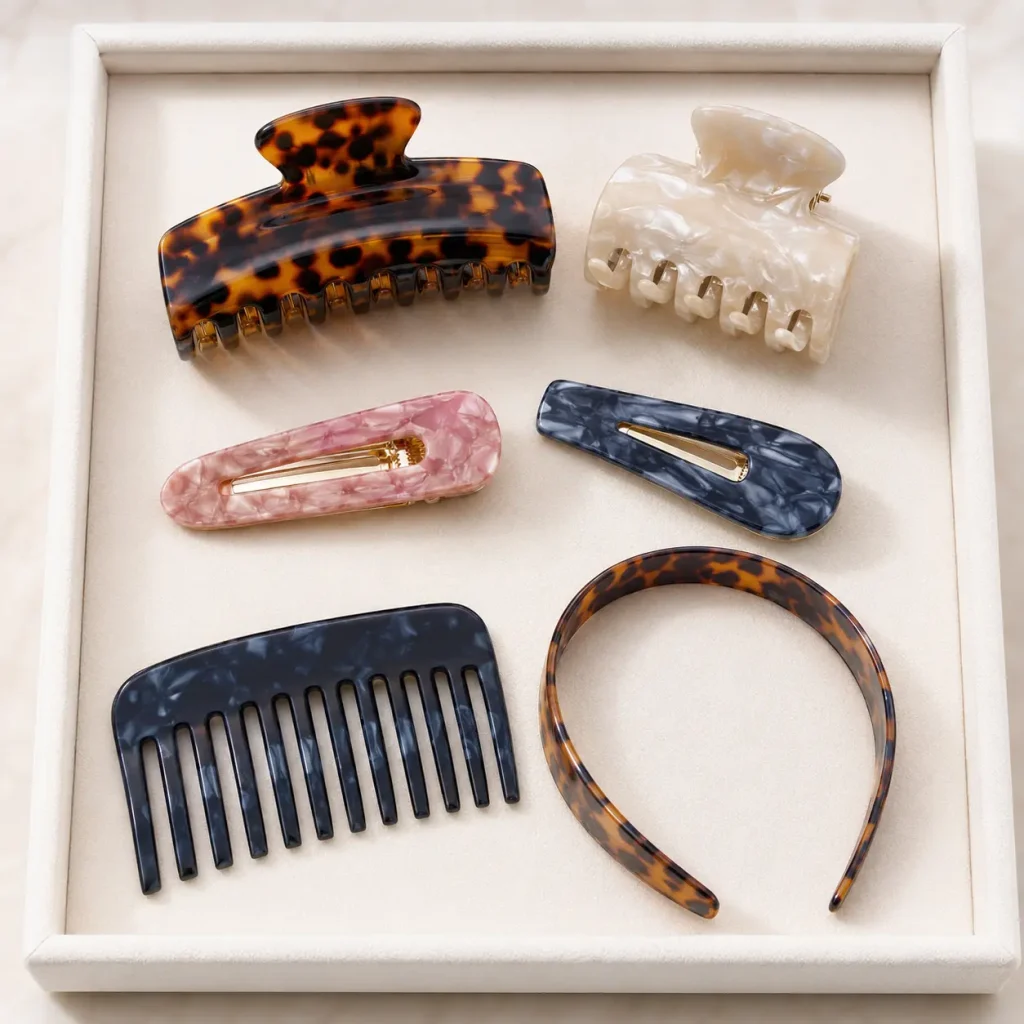
Featured Image: Premium cellulose acetate hair accessories collection
A buyer recently asked us a very common question after comparing two hair claw clips.
“One is plastic and one is cellulose acetate. They are almost the same shape. Why is the price different?”
From a distance, they can indeed look similar. Both are hair claws. Both have teeth. Both have a spring. If the product photo is small, most people will first notice the colour and shape, not the material.
But once the products are held in the hand, opened a few times, or worn in real hair, the difference usually becomes clear.
We are not against plastic hair clips. Plastic is still used in many collections, and for certain markets it is the right choice. A children’s promotional item, a low-price multipack, or a quick seasonal style does not always need a premium material.
The problem starts when a buyer expects a very low-cost plastic clip to give the same impression as a well-made acetate one. That is where customer expectations and product quality can easily stop matching.
What customers notice first
Most customers will not know the exact material name before buying. They simply pick up the clip and judge it by feeling.
Does it look flat or does the pattern have depth? Does the surface feel smooth? Is the edge comfortable? Does the product have enough weight? Does it look like something worth buying in another colour?
Basic plastic clips are normally injection moulded. This makes production efficient and keeps the price low. There is nothing wrong with that. But the colour can look a little flat, especially on black, brown, tortoise shell and marble-effect styles. Some patterns also look as if they sit only on the surface.
Cellulose acetate is different because it is cut from material sheets. Tortoise shell, pearl, marble and mixed colours usually have more depth and variation. After polishing, the material has a warm shine and a smoother feel.
For a buyer developing a collection, this matters more than it may seem. A clip that looks better in the hand also looks better in online photos, in a gift set, or displayed on a paper card. It gives the buyer more room to build a premium price range instead of competing only on the cheapest option.
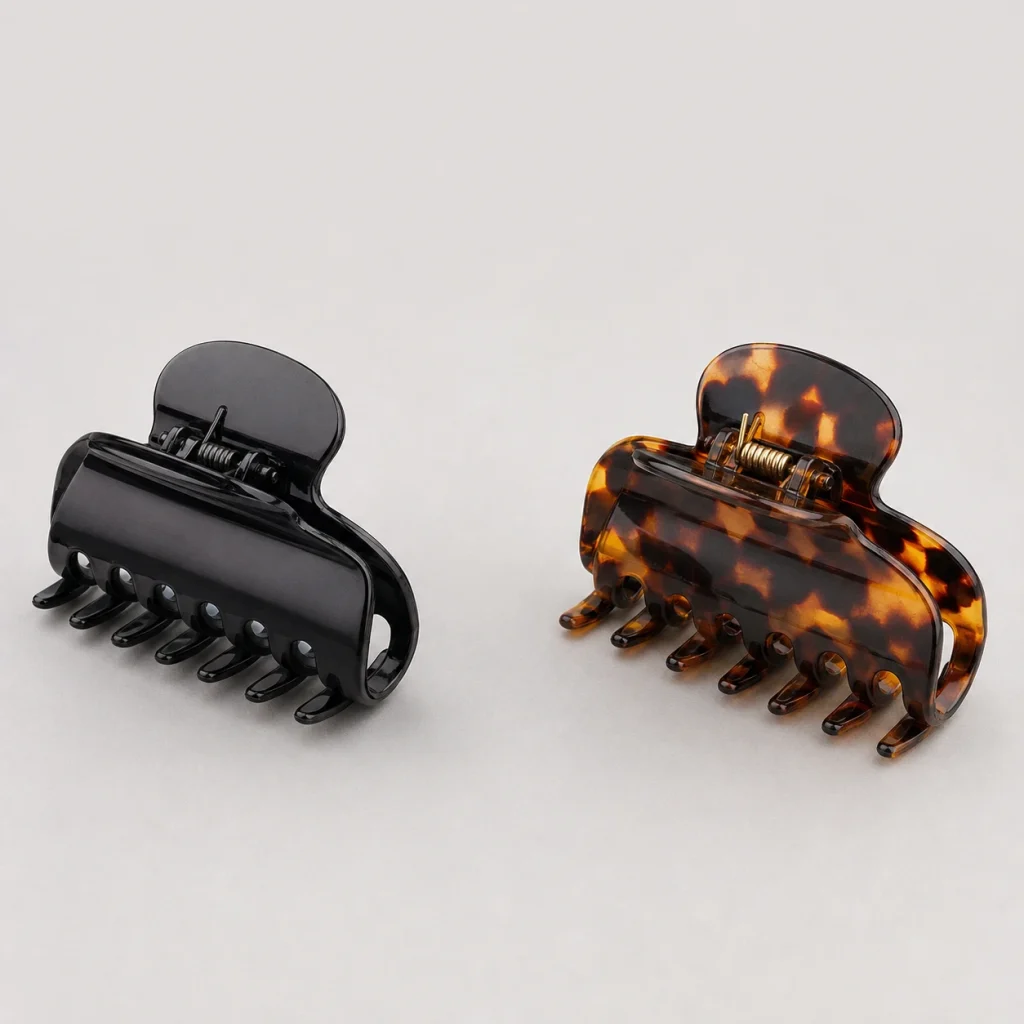
Figure 1: Plastic hair clip and cellulose acetate hair clip comparison
The shape may be the same but the product is not
We often receive reference photos from customers. They may show a simple rectangular claw clip, a bow-shaped clip, or a classic tortoise shell side clip. At first glance, the request looks straightforward.
Then we need to ask practical questions.
- Is the clip for fine hair or thick hair?
- Should it be light for everyday use, or large enough to hold a full French twist?
- Does the customer need a strong closing force?
- How many teeth are suitable?
- What kind of spring will be used?
- Will the edges be polished by hand after cutting?
These details do not sound exciting, but they decide whether the clip feels good after it reaches the customer.
A good acetate hair claw is not only about the acetate sheet. The edge needs to be smooth enough not to catch hair. The teeth need a suitable shape. The spring needs enough tension to hold the hair, but should not make the clip difficult to open. The hinge and spring also need to be assembled properly.
That is why two clips that look almost identical in a catalogue can behave very differently in real use.
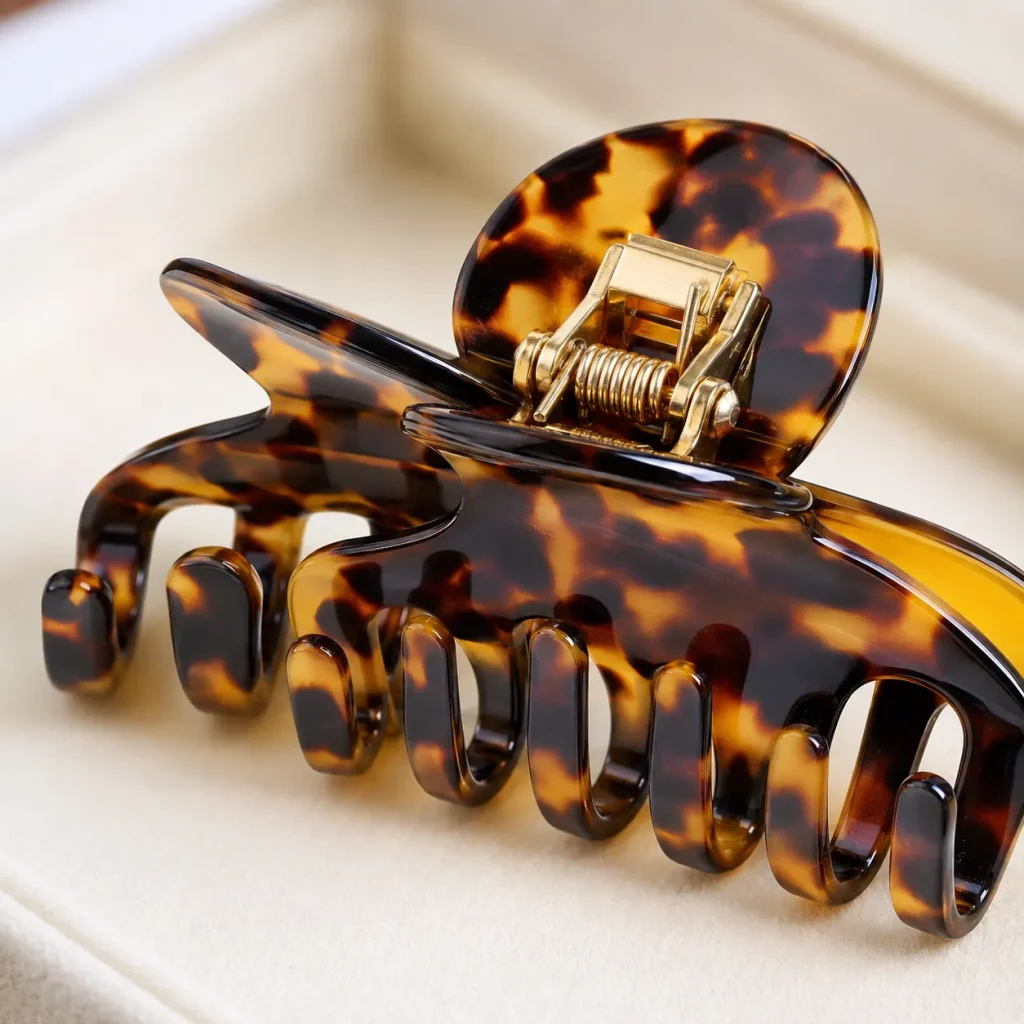
Figure 2: Polished cellulose acetate edge, teeth and spring detail
Why the lowest purchase price can become expensive later
For buyers working with very tight price targets, plastic is often the easier option. The starting cost is lower, and it is possible to create many colours and shapes quickly.
But a B2B buyer does not only calculate the starting cost. The product also needs to sit at the right price level, fit the collection, and leave end customers with a good impression.
When a clip looks too light or too basic, there is less room to price it higher. When it breaks, loses tension or feels rough in the hair, the buyer may end up dealing with exchanges, refunds or negative reviews. Even if the unit price was low, the overall cost can become higher.
With acetate, the factory price is usually higher than basic plastic. However, it gives brands, wholesalers and importers a stronger product story. It has a more premium appearance, richer colour, a smoother polished finish and stronger gift value.
This is why many buyers do not replace all their plastic products at once. They begin with a few core styles that already sell well. A medium claw clip is often a good starting point. If that works, they add several colour options, then matching side clips, combs or headbands.
It is a more sensible way to test the market.
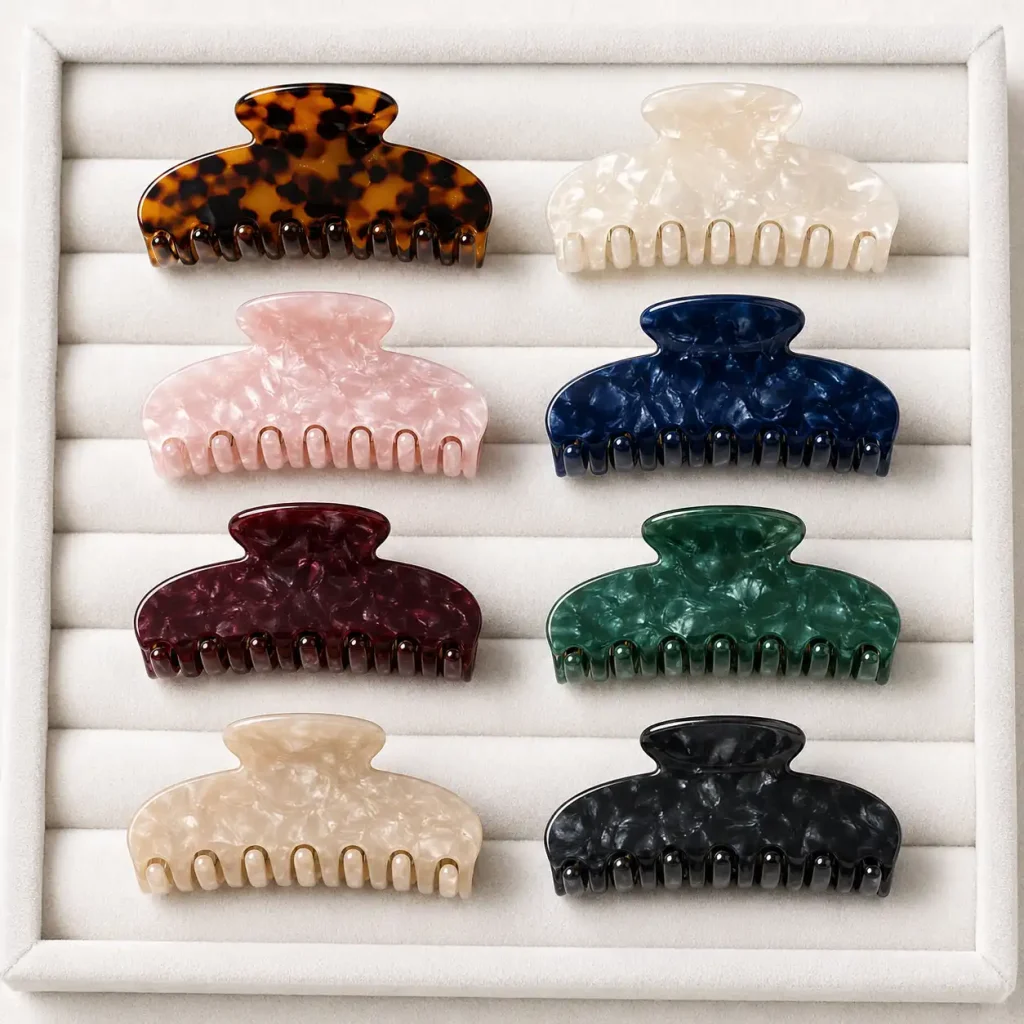
Figure 3: Multiple cellulose acetate hair claw clips in premium colours
What happened with one Nordic customer
We met one Nordic customer at the Hong Kong Fair in 2019. At that time, they were already buying hair accessories, mainly in lower-priced materials. Their monthly orders with us were usually around USD 3,000 to USD 5,000.
Later, they began adding some acetate hair claws and clips to their assortment. They did not make a dramatic change. They picked several styles that had been selling steadily, then worked on more suitable colours and better packaging.
Their thinking was quite practical. They still needed accessible price points, but they also wanted a group of products that felt more special and could be sold at a better price.
The acetate styles gradually became a more important part of their collection. They received better feedback on the feel and appearance of the products, and there were fewer complaints about overall quality. Their purchasing volume grew over time. Now their orders are often around USD 8,000 to USD 12,000 per month, and they have said they plan to visit China again this year.
Not every buyer will get exactly the same result. Different countries, price ranges and sales channels need different products. But this is a pattern we have seen more than once: when a brand or importer offers products that look better and feel better in daily use, end customers are usually more willing to pay for them.
Plastic still has a place
Plastic hair clips are not something B2B buyers need to avoid completely.
They are useful for entry-level collections, children’s products, large promotional programs and styles where price is the main consideration. In these cases, plastic can be the right material.
A balanced product range often works better than choosing only one material. Plastic can cover the low-price end. Cellulose acetate can be used for classic hair claws, side clips, headbands and combs where finish and perceived value are more important.
The key is to be clear about what each product is meant to do. A low-cost clip should be sold as a low-cost clip. A premium clip should have the material, finishing and structure to support its price.
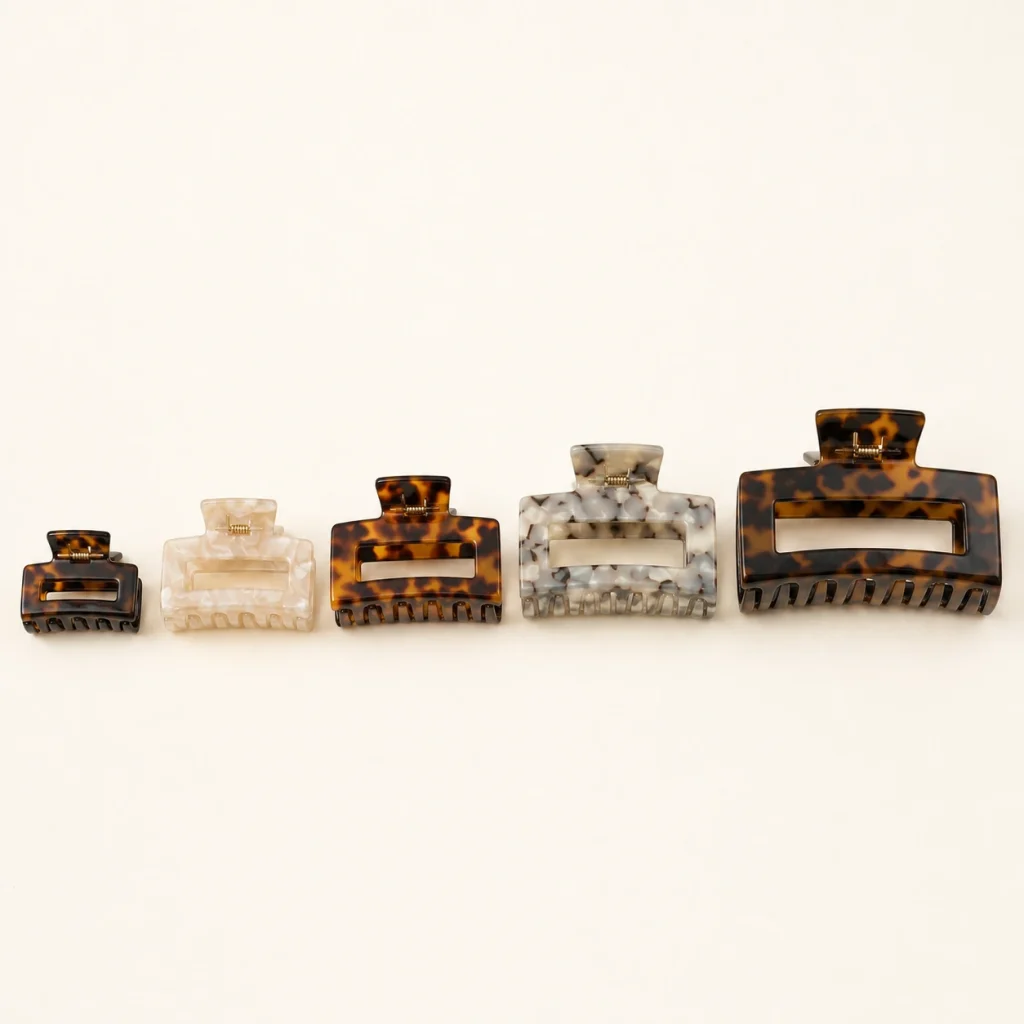
Figure 4: Different sizes of cellulose acetate hair claw clips
Before placing an order
Photos are useful, but a real sample tells you much more.
Open and close the clip several times. Check the spring. Touch the edges. Try it in the hair that the product is designed for. Compare the material thickness and the product weight. Look at the colour in natural light rather than only under studio lighting.
These simple checks can prevent many problems later.
For acetate hair clips, we usually suggest buyers pay attention to the material finish, edge polishing, teeth shape, spring tension, logo application and packaging details. If the product is for a specific customer group, such as thick hair or fine hair, that should be discussed before sampling as well.
Final thoughts
Plastic and cellulose acetate are not direct substitutes in every situation.
Plastic works when price is the priority. Cellulose acetate is more suitable when a buyer wants to create a stronger-looking product range with more retail value and a better wearing experience.
For buyers who are not ready to change the whole collection, there is no need to do that. Start with a few proven shapes. Test the response. Then build the range based on what actually sells.
Yiwu Glory Hair Accessories develops and produces cellulose acetate hair claws, clips, barrettes, combs and headbands for brands, retailers, wholesalers and importers. We can support custom colours, logo application, paper cards, packaging and OEM or ODM development.
If you are considering an acetate collection, send us the styles you are interested in, your target quantity and your packaging ideas. We can start from samples and work through the details before bulk production.
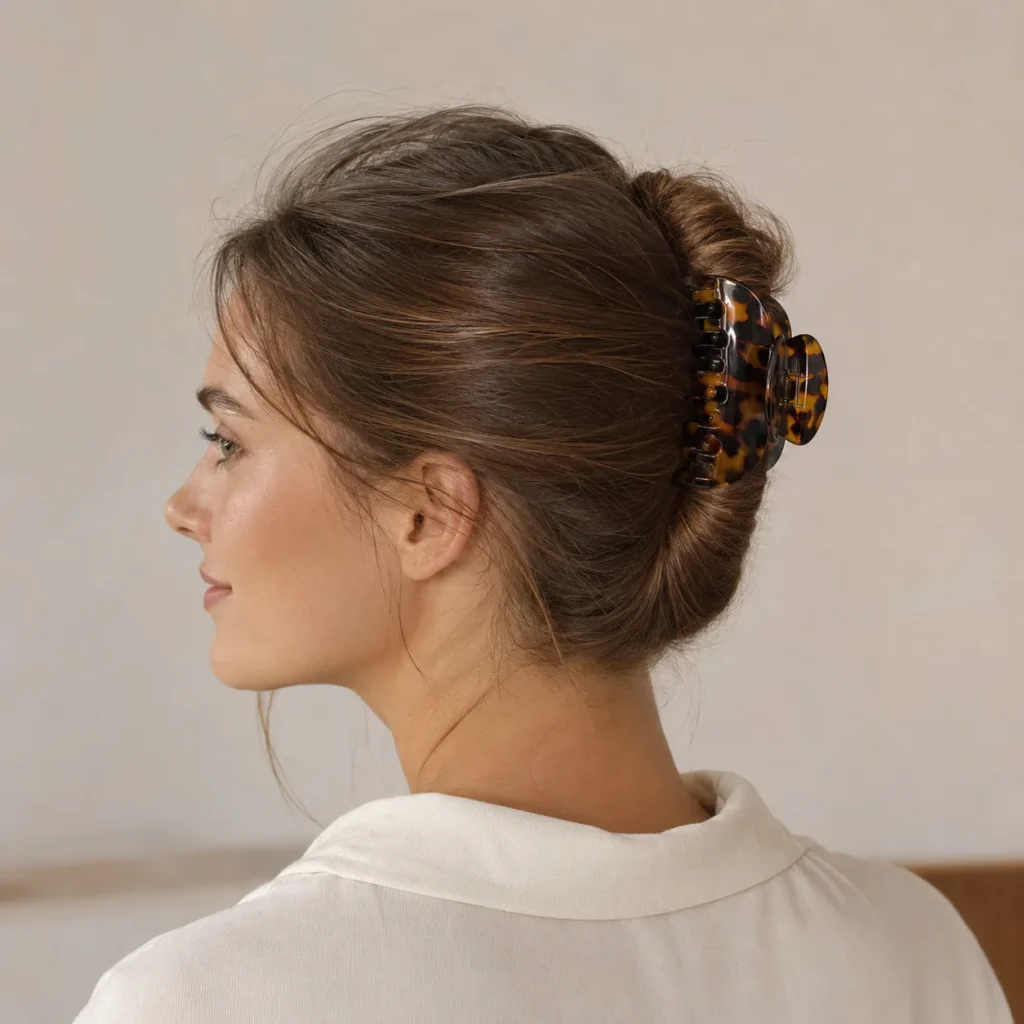
Figure 5: Model wearing a premium cellulose acetate hair claw clip